 In many respects, I feel I am becoming less productive as I age. My job resume no longer reflects as many accomplishments, which seemed to accumulate quickly in my youth. The races won are fewer and far between. The aspiration to establish and manage a thriving company is fading away.
To offset this apparent slacking, however, I believe that there is an awakening of spirit – one which ultimately represents another form of productivity altogether. From an Islamic perspective, and, I would argue, from most faith-based traditions, our productivity should be entirely for Allah,  : our work, our leisure, our child rearing, our prayers should all be intended to serve and glorify the Creator of the universe. This is all much easier said than done, but such was the example laid out by the Prophets and perfected in the final Prophet
  .
.
And yet, increasingly, the prominent philosophy of our day propounds that self aggrandizement – the realization of oneself for oneself – is the ultimate goal. Charitable works are afforded their place, but the reason behind them, unfortunately, often leads back to the sense of fulfilling one’s own glory. And so a Muslim, or any person of faith, often feels largely counter-culture.
This duality is not new, but its increasing prevalence is a novelty, and we are just starting to see the consequences. The fact that many of us live for ourselves in a spiritual vacuum has serious repercussions for our mental and physical health, as well as the health of the planet.
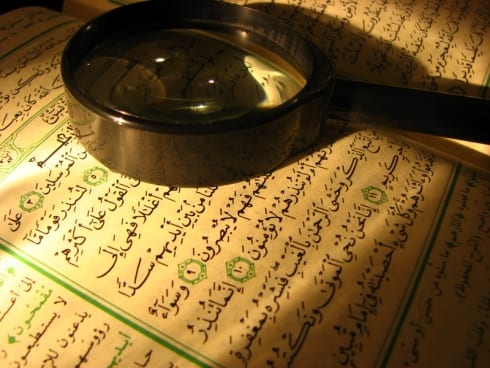
I will not belabor the disconcerting statistics that point to declining universal health in an increasingly modern world: instead, I would like to reiterate several points about an alternative productivity, namely that of the aspiring huffadh in our midst, or those who have been blessed with the opportunity to memorize and preserve the words of the Holy Quran. This effort, in the prevalent dogma of our time, may seem very counter-culture, and yet, I think that it is sustainable, and will ultimately uplift, enlighten, and help return us to the goal for which we came into the world – to serve and glorify the Creator of the universe. So how do we embark on this goal?
- It is first important to realize that hifdh Al Quran is not reserved for a select few. Although only some of the ummah may recite at taraweeh, it does not mean the rest of us are out of the club. Hifdh Al Quran does not have an age limit; it does not have an ethnic component (or an economic one for that matter). If you are a white woman over 30 or a black man over 60, you are welcome. Earning power is not a determinant. Think of the Sahabah: although many (not all) were Arabic speakers, they were otherwise very diverse in terms of age and background, yet all came to preserve the heavenly words of the Quran.
- Second, you need not be enrolled in a full-time hifdh program. Although an instructor is a must, teachers take many forms, particularly in the age of the Internet – Skype instructors are becoming increasingly common, as are phone conferences, for this purpose. There are abundant opportunities to tailor a program to your own busy schedule.
- Remember, you are not a failure if you do not succeed in memorizing everything. The mere attempt to understand and preserve the words of the Quran is considered sunnah. A single verse well-preserved and embodied will be rewarded, inshaa Allah.
- The more effort you make, the more hifdh will transform you. If we only recite with our teachers on a specific day, hifdh will largely remain an academic exercise. However, if we start exchanging surahs with our loved ones or reciting in unison, our hifdh will start to come alive in a way that it was actually intended inshaa Allah. If our otherwise mundane chores are animated by the recording of a beautiful qari and we begin to recite in tandem, those same chores will take on an entirely new meaning. As just one example, I drive a ‘hifdh mobile’ throughout the day, using potentially lost travel time as critical review.
- Following from above, try to use complex family situations to your advantage. Try to make hifdh the common language, particularly when there are two (or more) competing cultures living under one roof. This is particularly apt for many reverts who struggle to accept all aspects of their spouses’ culture. Hifdh, if approached in the true spirit of preserving and living Quranic ayaat, has the potential to be that alternative. Our home, after all, is a microcosm of the universe, and it may be one of resounding peace if you choose to make it as such.
- Finally, it is precisely in the times of stress and strain (and perceived utmost busyness) that the Quran has the potential to help us most. Turning to the Quran, and by extension, to the preservation of Quran in our hearts, actually has the potential to create more space and time in our lives by instilling a greater level of peace. This may seem counterintuitive as we look at our full schedules, but just try and then try again – particularly in the sanctity of salah – and you will see the miracle unfold, inshaAllah.
There are countless additional points that may be made beyond this brief overview. What are some ways that help you memorize and integrate the Quran in your life? Perhaps you have methods to learn other concepts that can easily be incorporated into hifdh. Whatever your strategy, may your journey with the Quran be full of peace and productivity!