As Muslim professionals, we understand that we are ’ibaad of Allah—slaves of Allah—and stewards on this earth, accountable for how we use every blessing we are given. For every knowledge worker, it is no secret that AI is one such blessing. The question is not whether to use it, but how.
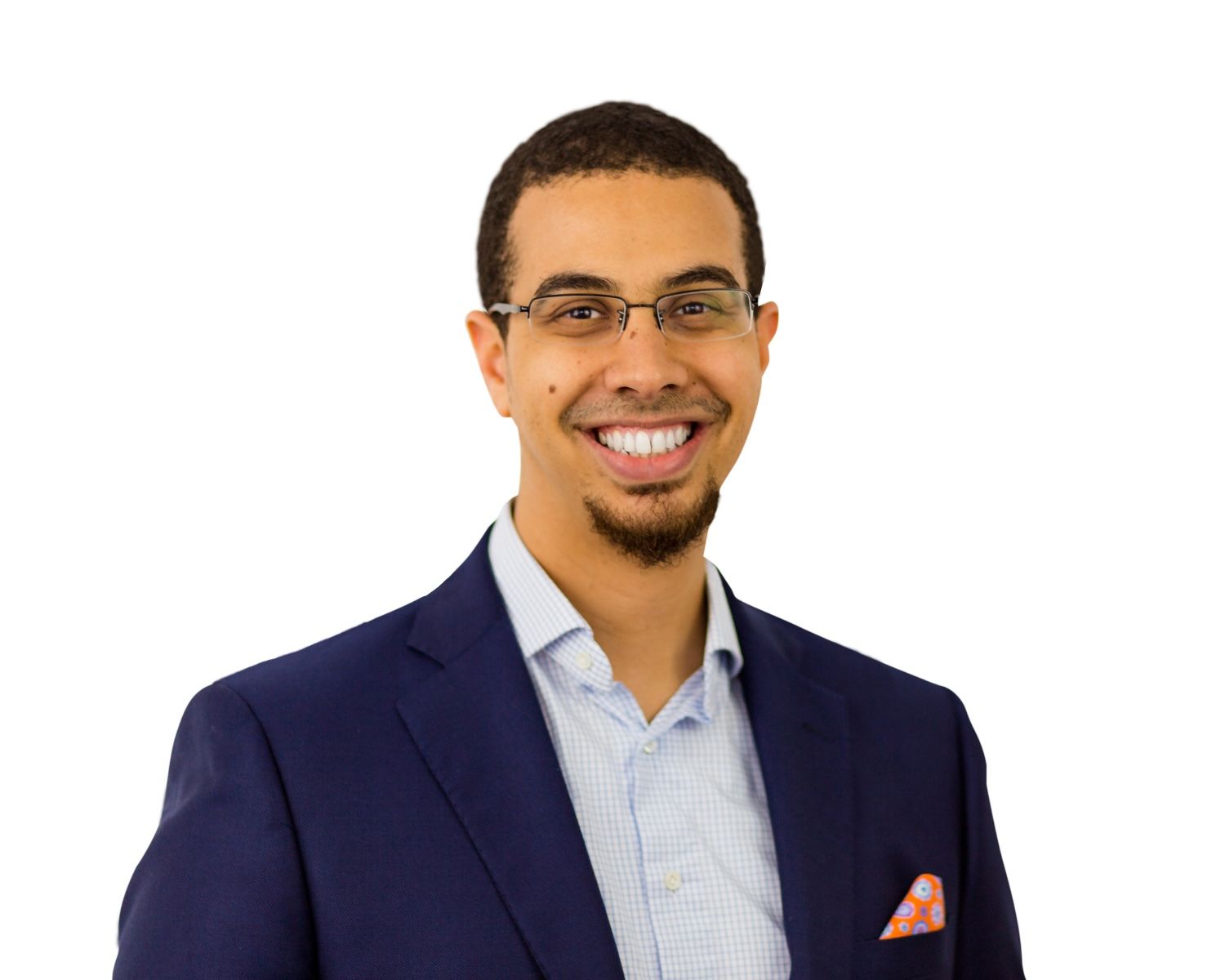
Between the two of us—one an AI engineer who has built products at Google, Uber and Canva (Waleed), the other a productivity author and researcher who has spent fifteen years helping Muslim professionals shift from hustle culture to Barakah Culture (Mohammed)—we have watched something remarkable happen to knowledge work in the last eighteen months.
And we believe the Muslim professional's greatest advantage in this new era is not a better prompt or a faster workflow. It is a tradition that has trained us, for 1,400 years, in exactly how to think and work in the age of AI.
What AI Has Actually Done to Our Work
In a typical 40-hour week, a knowledge worker used to spend roughly 70% of their time on execution—writing, building, drafting, designing, formatting, coding—and 30% on thinking: reading, analysing, debating, reflecting, and deciding.
AI is collapsing that execution phase at a speed that has shocked both of us.
For Waleed, what used to take 14 hours of execution time has dropped to 2–3 hours. The AI runs analysis, generates code, formats outputs. He reviews, course-corrects, approves. Each project now requires roughly 8 hours of his focused attention instead of 20.
For Mohammed, a piece of writing that used to take 4 to 6 hours now takes about half that. He provides the initial (handwritten) draft with his thoughts and ideas, and AI helps with research, sharpening arguments, and preparing the piece for final submission.
And we are not alone. Almost every knowledge worker we know—from engineers to lawyers—is already working this way, managing a growing portfolio of AI-assisted projects that would have been impossible two years ago.
AI Exposes Hustle Culture
AI is not just changing how we work. It is exposing the deepest assumptions we carry about why we work, what our work is worth, and who we are when the doing gets easier.
For decades, hustle culture has glorified busy work. The badge of honor was working long hours, sending late-night emails, being "always on."
However, in a world where AI can now produce more output, faster, and with fewer errors than the average busy worker, hustle culture doesn't make sense anymore.
AI is forcing us to ask deeper questions about who we are and what we're here for. It reminds us that our worth is not measured by busyness, and that the only things left that carry real weight are:
- Why are you doing the work (niyyah).
- What you choose to work on (and what to leave alone).
- How well you're doing it (ihsan).
In the age of AI, these are the only questions that matter for professionals. And our tradition has been training us in them for fourteen centuries.
The Power of Tadbir
Our tradition has language for the two halves of meaningful work.
What AI has done is collapse 'amal. In many cases by 80% or more.
What it has not done, and cannot do, is collapse tadabbur.
In fact, every time we try to rush tadabbur with AI, the result is what people now call "AI slop", polish but hollow output that doesn't carry weight and isn't actually useful.
Tadabbur requires reading, thinking, reflecting, consulting, and time. And this tadabbur sends us ilhaam (inspiration) that comes on its own schedule, not ours.
So the first question AI forces on us is: how do we do tadbir better?
Below are five spiritual and mental tools to help us improve our tadabbur skills.
1. Set Powerful Intentions (Niyyah)
Last week, Mohammed sat down to write a newsletter for his community. He initially thought he'd write a simple piece announcing his new company, the Barakah Culture Company, the B2B arm of his training work.
But when he sat down to write, he asked what his intention really was, and realized what he actually wanted to write was a piece on the importance (and urgency) for Muslim corporations and organizations to decolonize themselves from Western models of corporate culture.
That single upgrade of intention from "sending a marketing email" to "writing something useful and beneficial for the Ummah" transformed a 500-word newsletter into a 4,500-word article: How to Decolonize Our Muslim Corporate Cultures.
Recently, Waleed was working on an article about how AI and Faith are starting to overlap in a way he’s never seen before. He thought there were a few good insights in there, but he realized after writing it that he wasn’t sure why he wrote it: was it to show off his insightfulness, perhaps? Waleed sat with the article for 10 days while he tried to work out what his intention was, and then he worked it out: he wanted to warn people of the changes to come. He then rewrote the article from that frame but with conviction and clarity he didn’t have before.
Before any action, a Muslim professional asks why.
The first hadith in Sahih al-Bukhari, narrated by 'Umar ibn al-Khattab (may Allah be pleased with him), is:
"Actions are but by intentions, and every person will have only what they intended."
Bukhari
In the age of AI, where you can produce work at five times the rate, a misaligned or unclear niyyah does not just waste your effort; it produces five times as much misaligned or unclear output. AI is a multiplier. It will multiply whatever niyyah you bring to the work including a corrupted or confused one.
Intentions aren’t static and you can sometimes start an activity with one intention and end it with another. This cuts both ways: you can start with a good intention and go off track, or start with a bad intention and correct it. Keeping your intention correct is a constant battle.
2. Set Time For Contemplation (Tafakkur)
The Qur'an repeatedly invites the believer to think:
إِنَّ فِي خَلۡقِ ٱلسَّمَٰوَٰتِ وَٱلۡأَرۡضِ وَٱخۡتِلَٰفِ ٱلَّيۡلِ وَٱلنَّهَارِ لَأٓيَٰتٖ لِّأُوْلِي ٱلۡأَلۡبَٰبِ ١٩٠ ٱلَّذِينَ يَذۡكُرُونَ ٱللَّهَ قِيَٰمٗا وَقُعُودٗا وَعَلَىٰ جُنُوبِهِمۡ وَيَتَفَكَّرُونَ فِي خَلۡقِ ٱلسَّمَٰوَٰتِ وَٱلۡأَرۡضِ رَبَّنَا مَا خَلَقۡتَ هَٰذَا بَٰطِلٗا سُبۡحَٰنَكَ فَقِنَا عَذَابَ ٱلنَّارِ ١٩١
"Indeed, in the creation of the heavens and the earth and the alternation of the night and the day are signs for those of understanding - Who remember Allāh while standing or sitting or [lying] on their sides and give thought to the creation of the heavens and the earth, [saying], "Our Lord, You did not create this aimlessly; exalted are You [above such a thing]; then protect us from the punishment of the Fire."
Surah Ali 'Imran [3:190-191]
Tafakkur is a deliberate, structured type of reflection. It is taking the time to sit with thoughts—sometimes for days—before deciding and acting.
In a work culture where we are tempted to outsource thinking the moment something becomes hard, tafakkur is the discipline of staying with the difficult questions.
For both of us—and we suspect for most of you as well—our best ideas come when we are walking, driving, or simply reflecting. Not when we're staring at a screen.
3. Ask Advice From Humans (Istishara)
The Qur'an describes the believers as those "whose affair is by mutual consultation":
وَٱلَّذِينَ ٱسۡتَجَابُواْ لِرَبِّهِمۡ وَأَقَامُواْ ٱلصَّلَوٰةَ وَأَمۡرُهُمۡ شُورَىٰ بَيۡنَهُمۡ وَمِمَّا رَزَقۡنَٰهُمۡ يُنفِقُونَ ٣٨
"And those who have responded to their Lord and established prayer and whose affair is [determined by] consultation among themselves, and from what We have provided them, they spend,"
Surah Ash-Shura [42:38]
The Prophet ﷺ himself consulted his Companions before Badr, Uhud, and Khandaq.
Istishara is the discipline of not deciding alone but sharing your ideas and seeking sincere advice.
Waleed has a for-profit company he runs and has created a “brains trust” of 5-7 people that he updates regularly about what is happening, just an email every now and then. When he’s not sure, he might check in with one or two of them.
In an era when many of us confide in AI more than we confide in our spouses, the art of seeking istishara from a human is starting to get lost. We don't want to deal with the messy reality of receiving feedback from people, especially when it might go against our "great" ideas.
But there's something about asking a human being—someone with a soul—for advice that often produces better outcomes than a "pleasing" AI chatbot ever could. AI will tell you what's statistically likely. A wise mentor will tell you what's true about you.
4. Ask Allah for Guidance (Istikhara)
Once a decision is taking shape, turn to Allah for guidance through Istikhara prayer.
The Prophet ﷺ taught his Companions istikhara as he taught them a surah of the Qur'an.
The dua of Istikhara is an admission that even with a powerful AI agent at your fingertips, our knowledge and our power are both limited.
Istikhara is a form of tadabbur that no algorithm can replicate, and we believe it is a powerful spiritual gift that, as Muslim professionals, we need to tap into more often.
5. Be Deliberate (Anaat)
When a delegation of the tribe of Abdul Qays came to Madinah, the Prophet ﷺ said to their leader Al-Ashajj:
"You have two qualities that Allah loves: forbearance (hilm) and deliberateness (anaat)."
Muslim
Anaat is deliberate patience in decision-making—the opposite of rushing.
In a time when every AI tool, productivity guru, and well-meaning manager is pushing you to ship faster, decide faster, and move faster, let's remember that "haste is from Shaytaan" and anaat is the Prophetic counter-instinct. Allah loves it. That alone should make us slow down before we hit "send."
Waleed will often write an important email and deliberately leave it overnight to sit with it and come back to it with fresh eyes, even though he’s burning to send the email and get it out. This has saved him from embarrassment multiple times.
Together, these five—niyyah, tafakkur, istishara, istikhara, anaat—are mental and spiritual tools that can make a real difference in your personal and professional life. Moreover, they often lead to ilham, that inspiration that comes to you as a lightning bolt when you least expect it!
The Amanah of Freed Time
We mentioned at the start of this article that AI has cut down execution time by almost 80%. So the question is: if each project now requires 8 hours of your focused attention instead of 20, what do you do with the rest of the hours?
If history has taught us anything, every previous productivity revolution has been followed by humans filling the freed hours with more work.
When washing machines were invented, people thought they would gain leisure time; instead, the standards of cleanliness simply went up. When email arrived, people thought they would have more time; instead, they filled their inboxes.
AI is a whole other level of productivity gain, and it supercharges this temptation to do more. The hustle-culture instinct is to grab the spare 12 hours and cram them with three more projects.
One of us (Waleed) thought about this windfall in a different way. He reflected that when the early Muslims received a windfall in battle, the Qur'an directed:
۞ وَٱعۡلَمُوٓاْ أَنَّمَا غَنِمۡتُم مِّن شَيۡءٖ فَأَنَّ لِلَّهِ خُمُسَهُۥ وَلِلرَّسُولِ وَلِذِي ٱلۡقُرۡبَىٰ وَٱلۡيَتَٰمَىٰ وَٱلۡمَسَٰكِينِ وَٱبۡنِ ٱلسَّبِيلِ
"And know that anything you obtain of war booty - then indeed, for Allāh is one fifth of it and for the Messenger and for [his] near relatives and the orphans, the needy, and the [stranded] traveler..."
Surah Al-Anfal [8:41]
AI has handed knowledge workers exactly that kind of windfall, a sudden abundance of capacity that did not exist two years ago.
What if we treated this windfall with the same spirit, dedicating a meaningful portion of our AI-freed capacity to serving the Ummah?
This is what Waleed does. Alongside his professional work, he dedicates roughly a fifth of his time to projects that benefit the Ummah, including Ansari, his AI assistant for Islamic knowledge—teaching AI to imams, and founding the Islamic Alliance for Safe, Ethical, Responsible AI (iaser.ai).
The Muslim Ummah faces enormous challenges, and most of us have said for years that we are too "busy" to help solve them. But with all this freed capacity AI has given us, what if we dedicated a fifth of our time to the Ummah's most pressing problems? These could be big Ummatic problems like lack of quality education in the Ummah or small/local problems like helping the elderly in your community or designing a new website for your local masjid.
These problems have always been constrained by the number of qualified people willing to dedicate time to them.
We no longer have that excuse.
Go Deep With Your Spare Time
If you're reading this and quietly panicking that you don't know what to "do" with your freed time, we want to give you permission to consider this:
Not every freed hour needs to go toward serious pursuits.
You can use that spare time to go deeper spiritually, improve your physical health, and strengthen your relationships. What if you used your spare time to:
In Mohammed's article The Weight of Time, he explored how the Qur'an does not speak of time as currency to be maximised. It speaks of time as something that will be weighed:
فَأَمَّا مَن ثَقُلَتۡ مَوَٰزِينُهُۥ ٦ فَهُوَ فِي عِيشَةٖ رَّاضِيَةٖ ٧ وَأَمَّا مَنۡ خَفَّتۡ مَوَٰزِينُهُۥ ٨ فَأُمُّهُۥ هَاوِيَةٞ ٩
"Then as for one whose scales are heavy [with good deeds], He will be in a pleasant life. But as for one whose scales are light, His refuge will be an abyss."
Surah Al-Qari'ah [101:6-9]
Every moment can be heavy with remembrance or light with heedlessness. Time does not carry intrinsic weight; it carries the weight of the deeds, intentions, and choices we pour into it.
This reframes the AI question entirely.
When AI hands you back 12 hours a week, the question is not, "How many more projects can I run?"
The question is: "How do I make this freed time heavy on my mizan?"
Where Do We Go From Here?
For Muslim professionals ready to engage with AI intentionally, here are three starting points.
A Closing Thought
AI is reshaping knowledge work at a pace that will only accelerate. The question is no longer whether AI will change how we work. It will. The question is whether we will steward that change as an amanah with intentionality, spiritual clarity, and a commitment to making our time heavy on the scale that matters most.
May Allah grant us the wisdom to use these new tools in ways that are heavy on our mizan and beneficial for our Ummah. May He purify our intentions, slow our hands when they need to be slowed, and pour His Barakah into the hours He has given back to us. Ameen.
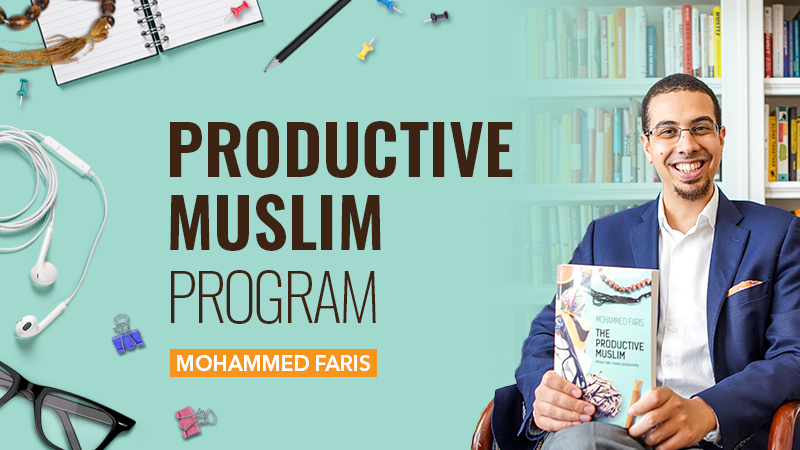
Ready to build a work life around niyyah instead of hustle?The Productive Muslim Program is a faith-based productivity transformation for high-performing Muslim professionals — bridging spiritual fulfillment and professional excellence through Islamic wisdom and peak performance science: