In Part 1 we looked at the mindset of a Muslim when mentally preparing for the weekend. Now it’s time for some practical suggestions for what to actually do with your time.
We start with Q2 activities – the important things in life that are likely to slip away as they don’t have urgent deadline pressures.
So What Q2 Activities Should You Do?
Here are my top 5 suggestions for Q2 weekend activities, which are all in line with Islamic virtues.
#1 Increase Your Worship
Free time at the weekend is a blessing. We all would love more free time. A secret of the pious is that whenever they want to increase a blessing they give shukr for it, due to Allah’s ﷻ promise in the Qur’an:
وَإِذۡ تَأَذَّنَ رَبُّكُمۡ لَئِن شَكَرۡتُمۡ لَأَزِيدَنَّكُمۡۖ وَلَئِن كَفَرۡتُمۡ إِنَّ عَذَابِي لَشَدِيدٞ ٧
"And [remember] when your Lord proclaimed, 'If you are grateful, I will surely increase you [in favor]; but if you deny, indeed, My punishment is severe.'""
Surah Ibrahim [14:7]
What better way to give thanks for our free time than to increase our worship in it? Through this, inshaAllah, we will be blessed with more quality time. Throughout the week we may skip our Sunnas, read very little Qur’an and have poor concentration in salah. Now we’ve hit the weekend, let’s make up for lost ground.
#2 Visiting Family
Living in Leicester, a city where hundreds of Muslims migrate to for the Islamic environment, it can be exasperating trying to find your friends in the weekend. Why? They’re busy travelling to Preston, Bolton,and London or across the city visiting relatives The weekend is the traditional time for Muslims, especially in the West, where families tend to be dispersed, to visit in-laws, parents, siblings and call relatives back in the Muslim heartlands. And such customs are excellent Q2 habits to maintain as the Prophet ﷺ informed us:
"Anyone who desires the expansion of his provision or to have the best of his life prolonged, should maintain ties of kinship."
Al Adab Al Mufrad
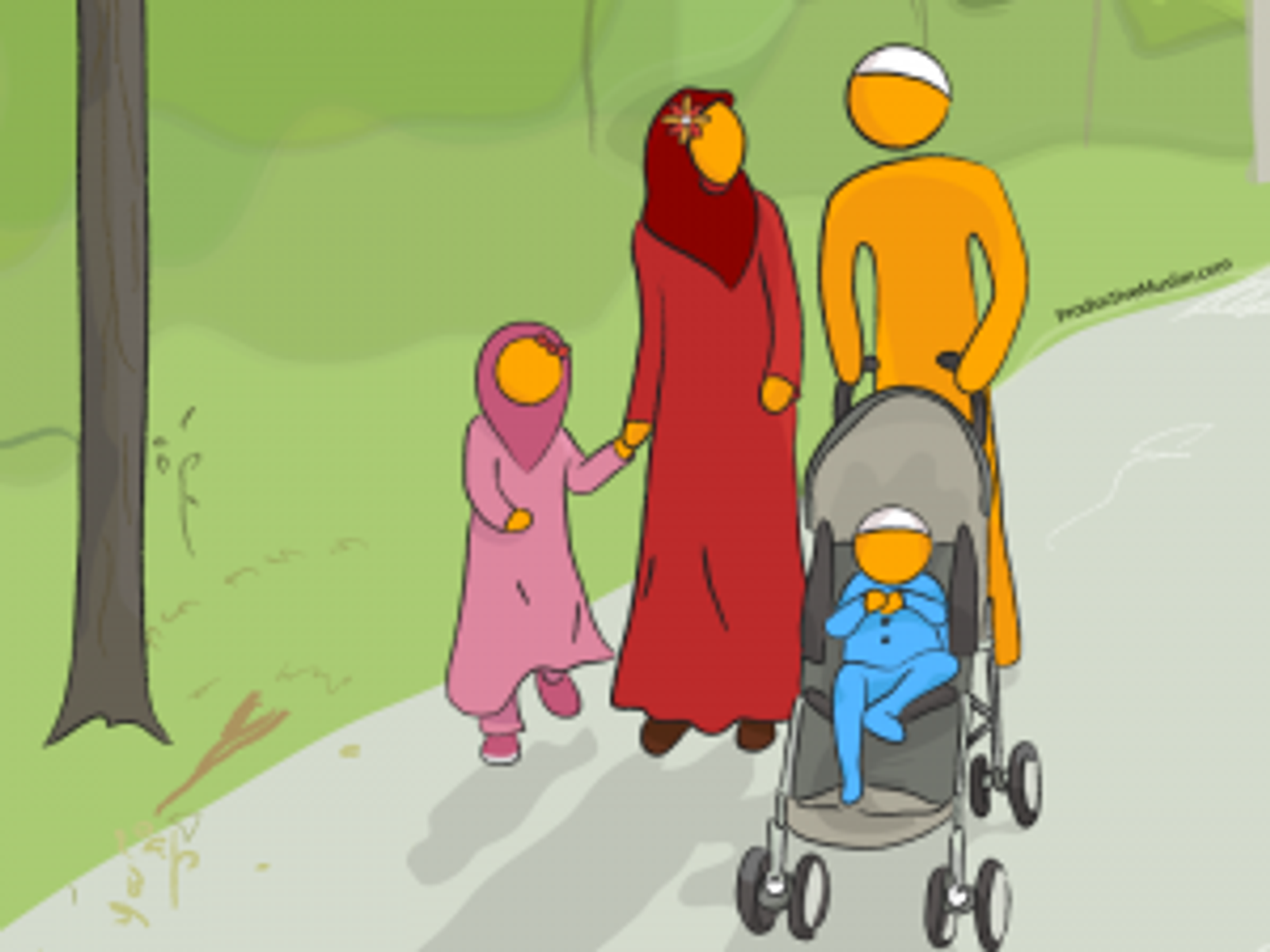
#3 Spending Quality Leisure Time with One’s Spouse and Children
The Messenger of Allah ﷺ urged us in the most unequivocal words to take care of our families:
"The best of you are those who are the best to their families, and I am the best to my family."
Sunan at-Tirmidhi
As a teacher, I’ve seen the terrible consequences of ‘absentee fathers’ who work long shifts at the weekend, sometimes living for long stretches abroad, spending hardly any time with their kids. It doesn’t matter how long one’s beard is or how outwardly pious you may look, if you’re not spending quality time with your children – especially if they are in their teens – then don’t be surprised if they start acting up in all sorts of un-Islamic ways.
Boys in particular, in our times, need strong male role models if they are to avoid succumbing to a myriad of dangerous temptations. Two books which give fantastic advice about raising families in modern society include Stephen Covey’s ‘7 Habits of Highly Effective Families’ (the concepts of emotional bank accounts and one-on-one time are very powerful) and Sue Palmer’s ‘Toxic Childhood’ (I believe every parent should read this important book as it explores aspects of modern life which are ruining our children).
Activities with family and children should be varied and stimulating. Regular trips to museums, exhibitions or shared outdoor adventures can create immense bonding, revive spirits and provide cherished memories to last a lifetime. Such outings help refine teenagers, cushioning them away from the worryingly prevalent ‘rude boy’ or gangster culture which tends to attract a lot of Muslim youth.
#4 Studying Islam and Attending Gatherings of the Pious
Alhamdulillah, there is an abundance of courses, ranging from one-day conferences to 5 year ‘alimiyya’ programmes, locally, nationally and online, that can be undertaken solely on weekends. Also, any other gatherings of the ‘ulema or pious for the sake of learning sacred knowledge or remembrance of Allah are ‘groves of Paradise’ which should be attended as much as possible:
"No people sit remembering Allah, the Mighty and Exalted, without the angels surrounding them and mercy covering them and tranquillity descending on them and Allah mentioning them to those who are with Him."
Ibn Majah
I personally have come across dedicated students who, through their hard work at weekends, have learned Arabic to a high level, some graduating to scholarly levels. May Allah ﷻ grant us such aspiration and inspire us to put in the time.
# 5 Wholesome Recreation
The Messenger ﷺ and his Companions (RA) were incredibly fit. Even a cursory browse of some of the accounts of their military campaigns, shows an astonishing level of physical endurance. Similarly, we often read about the well known sacrifices of scholars from the early generations, such as Imam al-Bukhari or Baqiyy ibn Makhlad and countless others, who thought nothing of walking thousands of miles to learn hadith. Aside from the stirring example of dedication to knowledge, these great men must have been at a high level of health to undertake such lengthy journeys – in an age well before modern transport or advances in medicine. Life in those times involved daily physical exertion – more than even daily trips to the gym would provide – and kept people healthy.
Modern conveniences and lifestyles can mean for most of the week we can be confined to limited office space, driving everywhere and eating processed or junk food. For inspiration to get healthy and realise the potential of our bodies, I recommend John Robbins’ eye-opening book ‘Healthy at 100’. The weekend is a perfect time to get healthy: cook organic, wholesome home-cooked meals; go on long walks, hikes or camping; participate in weekly football or basketball (my wife enjoys ‘sisters-only basketball’ twice a week). Such activities can be combined with an intention to raise money for charity. For example, last summer a group of friends and I organised a family trip to Snowdonia. One of the brothers suggested getting sponsored for climbing Mount Snowdon and sending the money to Syria. We were going to climb anyway and it was fun, but by getting sponsored we managed to raise £5,000, alhamdulillah, for the refugees.
Start Your Weekend on Friday!
A final, rather novel point, I’d like to make in this article is that we should realign our weekend – or ‘days off’ – to include Friday. Earlier I discussed how Western attitudes to the weekend can influence us. The rhythms of our week, from 9-5 working hours and the weekday/weekend pattern, do not really beat to the tune of traditional Muslim culture. For one thing, the Western work-cycle (which unfortunately prevails in most of the Muslim world) cares little about salah times whereas the early Muslims would work around them. This is why it would be the practice of early Muslims to start work soon after Fajr and work until Zuhr before enjoying the relaxing qaylula (siesta-style afternoon nap).
One way to maximise productivity on weekends and thumb your nose at capitalist/consumer forces is to start your weekend on Friday. Think about it: Saturday and Sunday being days of rest is from the Jewish and Christian traditions respectively. But Friday is the most sacred day of the week for Muslims and deserves to be part of our ‘weekend’ psychologically, even if we have to work.
The Status of Friday
The virtues of Jumu’a are so numerous that books have been written on the subject. Two authentic sayings of the Prophet ﷺ suffice for this article:
"Among the best of your days is Friday"
Abu Dawud
and
"On Friday, there is an hour when, if a Muslim slave asks Allah ﷻ for something at that time, He will give it to him."
Sunan An-Nasa'i 1431
And of course there is the obligatory Jumu’a prayer to make. Alhamdulillah, many observe that whereas only the truly practising Christians tend to go to church on Sundays, nearly all Muslim men – no matter how sinful otherwise – attend Jumu’a prayers when they can. A useful treatise in English is Shaykh Ibrahim Madani’s ‘The Essentials of Jumu’a’ (Madania Publications) and one can easily find hadiths about Jumu’a in any reliable collection. Indeed in this book (p8-9) he makes a profound point about the difference between how Muslims observe Jumu’a compared with Christians/Jews observing the Sabbath:
فَإِذَا قُضِيَتِ ٱلصَّلَوٰةُ فَٱنتَشِرُواْ فِي ٱلۡأَرۡضِ وَٱبۡتَغُواْ مِن فَضۡلِ ٱللَّهِ وَٱذۡكُرُواْ ٱللَّهَ كَثِيرٗا لَّعَلَّكُمۡ تُفۡلِحُونَ ١٠
"And when the prayer has been concluded, disperse within the land and seek from the bounty of Allāh, and remember Allāh often that you may succeed."
Surah Al-Jumu'ah [62:10]
Jumu’a is ‘Eid!
A fact that I didn’t learn until quite late in my life is that the Prophet ﷺ referred to Friday as ‘a day of celebration (‘Eid)’ and therefore commanded that it should not be singled out for fasting. Indeed in another hadith reported in Ibn Majah Friday is given even more precedence:
"Friday is the ‘mother’ of all days and the most virtuous in the sight of Allah Ta’ala. In the sight of Allah Ta’ala it has more greatness than Eid ul-Fitr and Eid ul-Ad’haa."
Ibn Majah
This is why the Sunnahs of this day, to wear one’s best clothes, bathe, etc. are similar to that of ‘Eid ul-Adha or ul-Fitr. The practical point is this. What would you do if one of the two ‘Eids fell on a work day? You’d take a dayoff, wear your best clothes, attend the communal prayer, have a feast, do some extra worship, visit loved ones and enjoy the day. Well you can now do this every week! This is why many Arab countries keep their weekends on Thursday/Friday (don’t forget that night precedes the day in Islam and so the night of Friday actually starts from Maghrib on Thursday) or Friday/Saturday. Even in Leicester I meet many who are either self-employed or part-time and they manage to keep Friday off. Alhamdulillah the Islamic-Montessori school I work for is closed on Fridays.
If your work situation makes it unfeasible to have a complete day off on Fridays, then you can still honour this leader of days as follows:
The weekend is sanctioned in labour laws as a legal period of rest from work, in Judo-Christian tradition as the time of the Sabbath, and in Western consumer-capitalist culture as the time for entertainment and fun. While Muslims can comfortably share some aspects of these traditions, we are also distinct in honouring Friday and maintaining productivity. We use the extra time to do more good for Allah ﷻ and we intend, even with our relaxation, the pleasure of Allah ﷻ.
قُلۡ إِنَّ صَلَاتِي وَنُسُكِي وَمَحۡيَايَ وَمَمَاتِي لِلَّهِ رَبِّ ٱلۡعَٰلَمِينَ ١٦٢
"Say, "Indeed, my prayer, my rites of sacrifice, my living and my dying are for Allāh, Lord of the worlds."
Surah Al-An'am [6:162]
Ready to stop just reading about a better weekend and actually live it? Book your Routine Doctor session today:

![[Ramadan Series] Rethinking Time Management this Ramadan: Part 2](https://cdn.sanity.io/images/2sxb14me/production/3762abbfb83a850e4edd42118cba7356ed23391e-688x449.jpg)